

This Poetic Form Series has come about from me reading what is subtitled, ‘an essential guide to the study of poetry.’ It is The Poetry Toolkit ( 2nd Edition) by Rhian Williams and it is stirring the pot. I have been writing poems for a very long time now and once upon a time I co-moderated of an online poetic community and was a participating member of a good few others. I wrote a ton of free verse stuff but mostly avoided using the classic forms, through ignorance, from not knowing the forms well enough. So this begins a process of re-wiring the poet within and acquainting myself with a range of poetic forms where I most definitely lack expertise. Expect a few more poems to
“come dropping slow, dropping from the veils of the morning……”
Excerpt from W.B.Yeats stunning poem, The Lake Isle of Innisfree
The rubaiyat (pronounced “roo-bái-yát”) is a Persian form of several quatrains. Its name is derived from the Arabic plural of the word for “quatrain,” rubá’íyah. This, in turn, comes from the Arabic word rubá, meaning “four.” Rubai (the singular form) is a quatrain or a set of two couplets. The Rubai form is more than a thousand years old. Rubaiyat was created by a non-Arab poet by the name Abul Hassan Rodeki. But the rubaiyat form was later taken to glorified heights by Omar Khayyam (1048-1133), a great Persian poet, astronomer, philosopher, and mathematician. Khayyam, lovelorn, became an addict to wine and, inspired by his blossoming delirious muse of memories of his estranged lover, he composed a number of beautiful rubaiyat, filled with love, pain, philosophy, and the panacean benefits of wine. His rubaiyat were translated into a number of languages, including the English version by Edward Fitzgerald.
The interlocking poem is comprised of quatrains following an aaba rhyme pattern.
Each successive quatrain picks up the unrhymed line as the rhyme for that stanza. So a three-stanza rubaiyat might rhyme so: aaba/bbcb/ccdc. Sometimes the final stanza rhymes all four lines.**
Lines are usually tetrameter and pentameter. ( In the original Persian the syllable count was 13)
** A great example of a contemporary Rubaiyat is this wonderful poem. ( Meter is Tetramic)
Stopping by Woods on a Snowy Evening
By Robert Frost
Whose woods these are I think I know.
His house is in the village though;
He will not see me stopping here
To watch his woods fill up with snow.
My little horse must think it queer
To stop without a farmhouse near
Between the woods and frozen lake
The darkest evening of the year.
He gives his harness bells a shake
To ask if there is some mistake.
The only other sound’s the sweep
Of easy wind and downy flake.
The woods are lovely, dark and deep,
But I have promises to keep,
And miles to go before I sleep,
And miles to go before I sleep.
Here is my Rubaiyat.
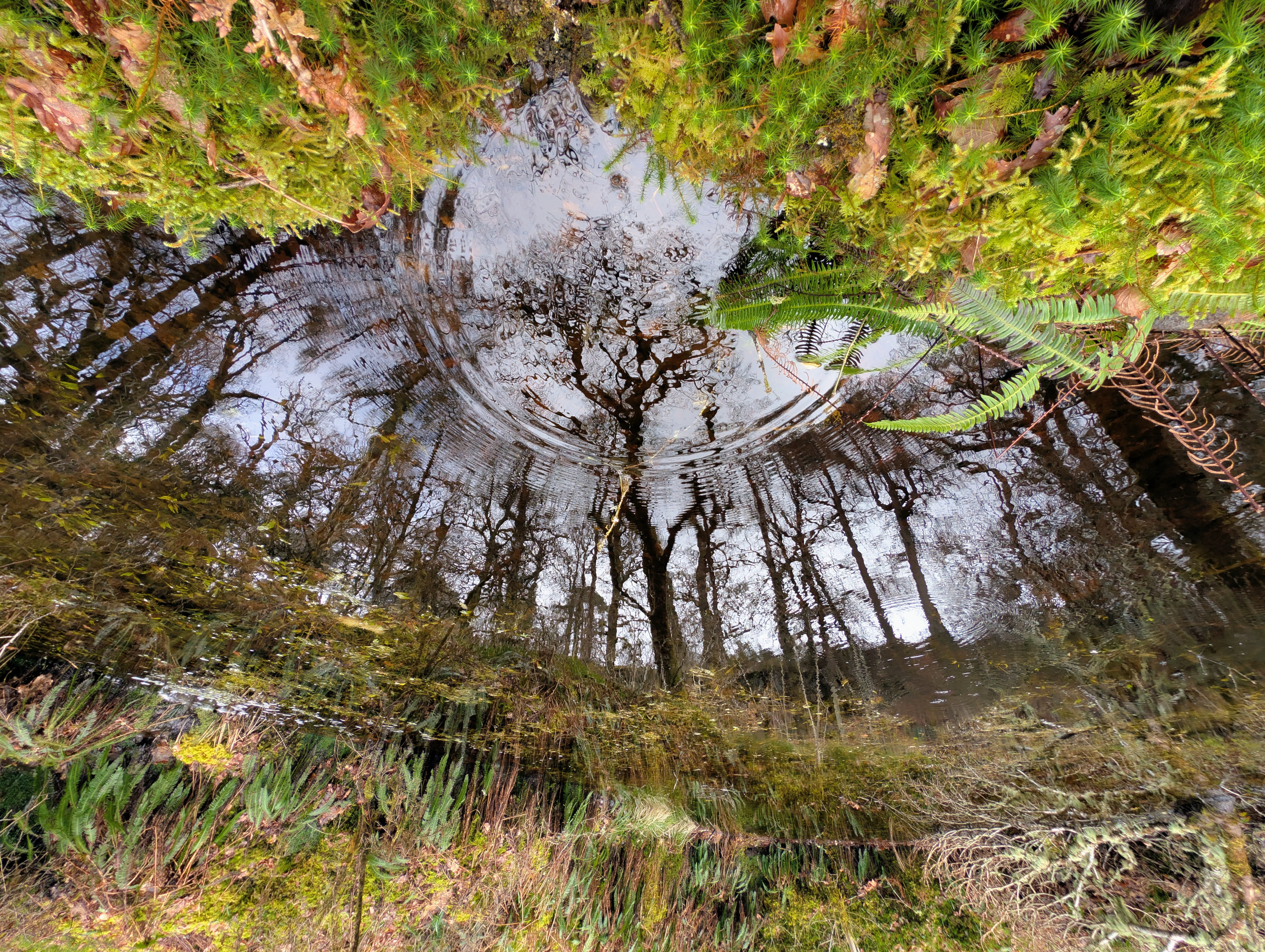
Ripples
This pebble now drops in the pond
and spins unfurled as if a frond
a rippled wave comes in its wake
reverberate, to weave a bond
we may believe there’s no mistake
though conscious thoughts we don’t just make
and once they leave they won’t come back
the sine’s are clear and will not break
be still we must so we might track
the impact of our thought filled whack
these tumbled words could use a hack
to elevate this this scribbler’s stack.
LOL... thanks to th Scribbler... happy Mother's day.